
The transformational impact of a working parents tax cut

We have been arguing that our proposal for a working parents tax cut would be transformational for hardworking Michigan parents with young children. Our proposed credit would direct $5,000 to EITC-eligible Michigan parents for each child they have under the age of 3, and $2,500 for each child between the ages of 3 and 6. […]
Michigan is missing talent-magnet neighborhoods

Last year, we released a proposal for the Neighborhood Talent Concentration Initiative (NTCI). The proposal was built on what we see as the new calculus of economic development: that talent attracts capital, and quality of place attracts talent. If you want a thriving state economy, you need to create the kinds of places that attract […]
Michiganders agree: working parents need a tax cut

Last fall, we released our proposal for a Working Parents Tax Credit (WPTC) here in Michigan – a large, refundable tax credit directed to working parents with young children, to help defray the high cost of childcare and combat the so-called “benefit cliff.” Our proposal would send non-affluent working parents $5,000 for each child under […]
A model for Michigan cities in Columbus
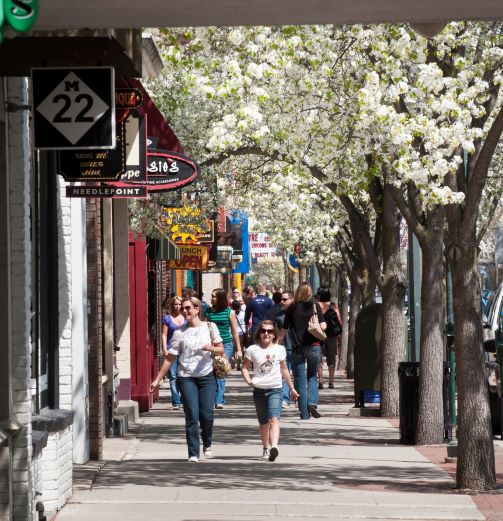
For years, we have been arguing that the economic development imperative in Michigan is to create places in our state that can retain and attract young talent. Because today’s young, highly-educated talent are concentrating in dense, walkable, amenity-rich neighborhoods within central cities, this means that to hold onto and attract more young talent, we need […]
Supporting working families with income instead of programs
Last fall, we released our proposal for a Working Parents Tax Credit (WPTC) here in Michigan. As the name suggests, this new refundable tax credit would be targeted to working parents with young children, sending $5,000 to EITC-eligible households for each child under three years old, and $2,500 for each child between the ages of […]
Reviewing the evidence on short-term credentials

In the postsecondary education landscape, short-term credentials hold a certain allure. In conversations around education and the future of work, certificates and credentials are often viewed as the way forward. To succeed in the future economy, the argument goes, some postsecondary education is needed, but it need not be a four-year degree. This argument holds […]
Mapping and addressing the “benefit cliff” in Michigan

This post summarizes a short report we wrote on the benefit cliff in Michigan, which can be found here: Mapping and Addressing Benefit Cliffs in Michigan In early 2023, Senator Kristen McDonald-Rivet established a working group to explore the so-called “benefit cliff,” and its impact on Michigan families. Most public benefits (SNAP benefits, housing assistance, cash […]
Michigan’s missing young adults

There’s a lot of attention right now on the state’s population. We’re not attracting and retaining enough young people, our workforce is aging, and our economy is sputtering. In response to these challenges, the governor has formed the Growing Michigan Together Council, primarily tasked with identifying a set of recommendations for how to grow the […]
Education and opportunity in today’s labor market
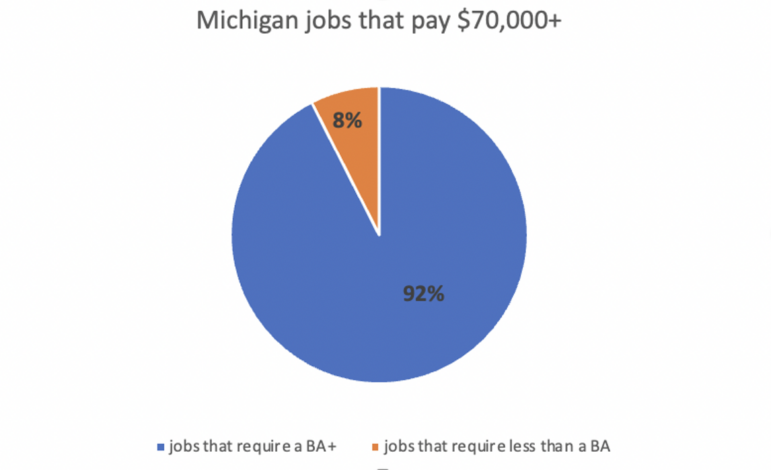
A statewide survey conducted by the Detroit Regional Chamber earlier this year reported some startling data about Michiganders’ views on the value of a four-year college degree. As reported in the survey, just 26.5% of Michigan voters said a college education was “very important” to landing a successful job in Michigan, while just 27.5% said a four-year […]
What’s missed in Mississippi’s success story

New York Times opinion columnist Nicholas Kristof recently wrote an article celebrating the growth in reading scores among Mississippi 4th graders. Of Mississippi, Kristof writes “It is lifting education outcomes and soaring in the national rankings. With an all-out effort over the past decade to get all children to read by the end of the […]